
Photography Basics
Exposure Triangle Explained Simply
Aperture, ISO, and shutter speed work like three interlocking gears — move one, and the other two shift with it automatically. Here’s how the relationship actually clicks.
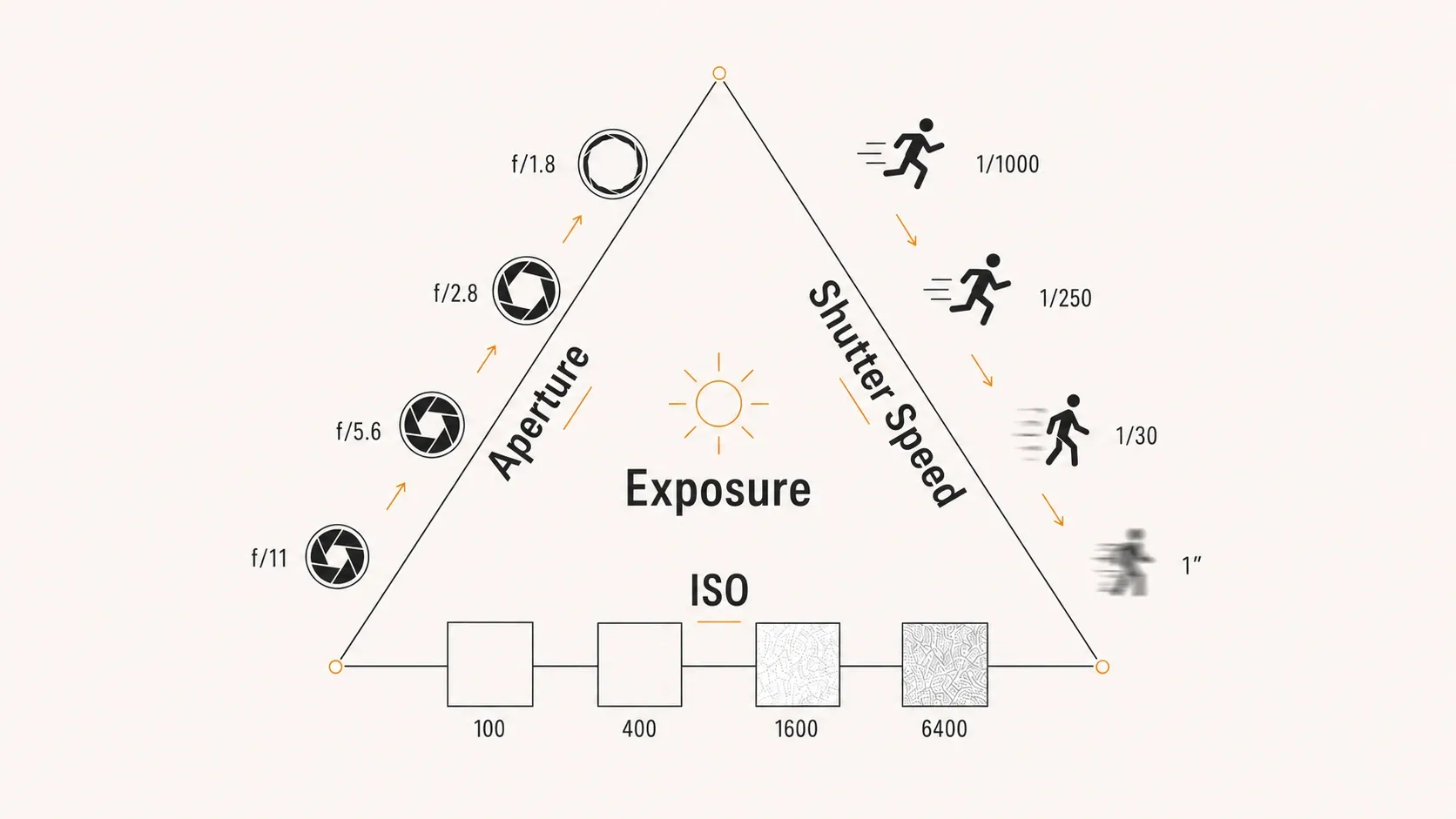
01What Is the Exposure Triangle?
The exposure triangle describes the relationship between the three core factors of exposure: aperture, shutter speed, and ISO. Together, these three settings determine how much light reaches your camera’s sensor and whether your camera produces a correctly exposed photo. Change any one of these parameters, and it automatically affects the other two.
Put simply: open the aperture wider, and twice as much light reaches the sensor — the image gets brighter. To keep the exposure correct and avoid overexposing the shot, you’d need to shorten the shutter speed or lower the ISO.
Close the aperture down, and less light enters the camera, which you can compensate for with a longer shutter speed or a higher ISO. A longer shutter speed means more light reaches the sensor — useful in low light, but also more prone to motion blur. This constant give-and-take between aperture, shutter speed, and ISO is what lets you find the right exposure in any situation.
In manual mode, you have full control over all three factors. The exposure triangle lets you experiment with different combinations and deliberately shape light, depth, and motion however you want.
02Aperture — Controlling Light and Depth of Field
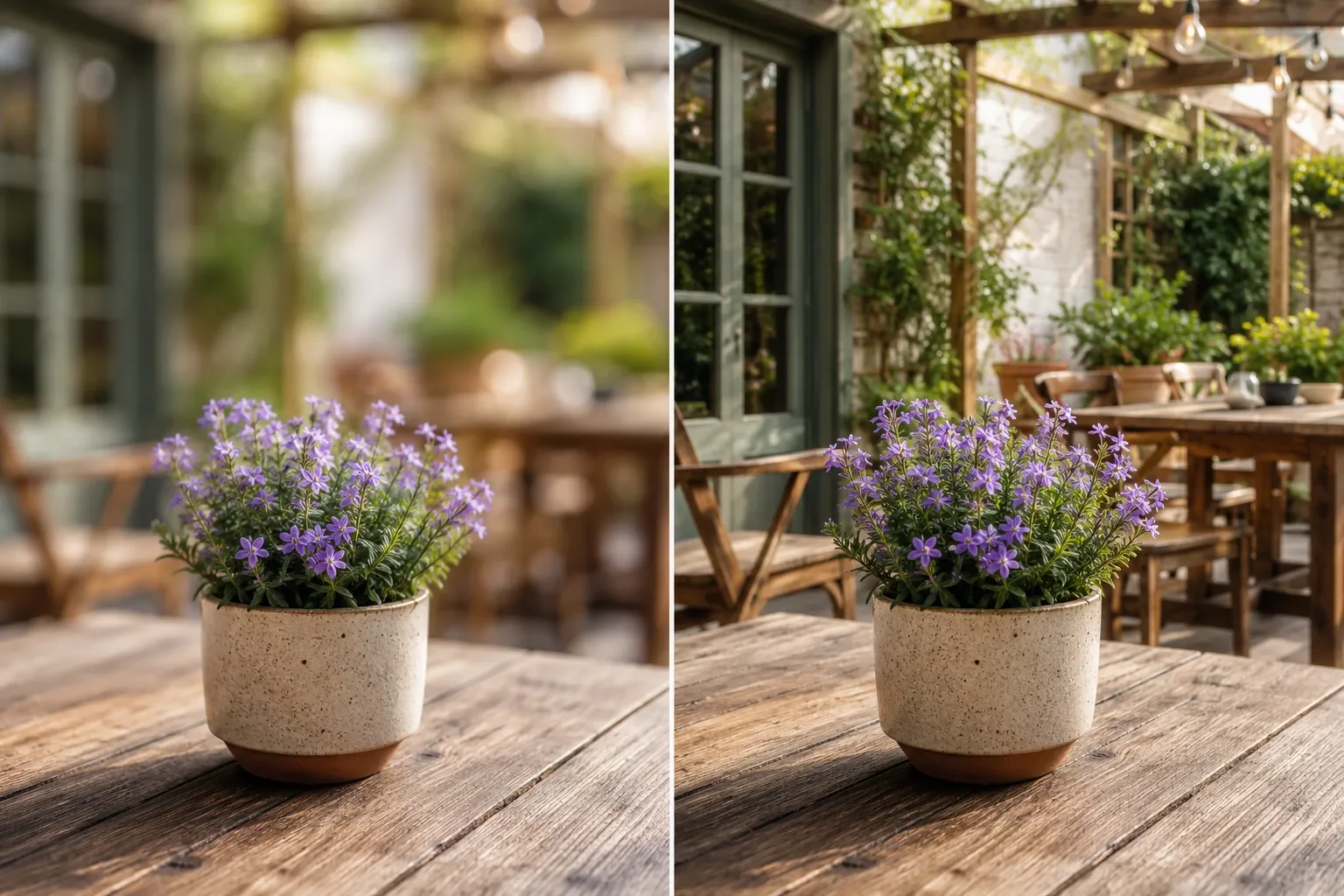
The aperture is an adjustable opening in the lens that lets light reach the sensor. It’s expressed as an f-number or f-stop — think f/1.8 or f/11. A wide aperture (low number) lets in a lot of light and produces a shallower depth of field, blurring the background so your subject stands out.
A narrow aperture (high number) lets in less light but gives you more depth of field, so your entire image looks sharper — especially useful for landscapes or architecture. Open the aperture wider, and twice as much light hits the sensor, which lets you work with a correspondingly shorter shutter speed.
The aperture isn’t just about how much light gets in — it also shapes the entire look of your image. Moving one full stop up or down doubles or halves the incoming light. That’s exactly why understanding the exposure triangle matters so much — it’s the only way to combine all three settings deliberately. Focal length plays a role here too, since it affects how strongly depth of field shifts at any given aperture.
03Shutter Speed — Freezing or Revealing Motion
Shutter speed determines how long light hits the sensor. A fast shutter speed, say 1/1000 of a second, freezes motion, while a slow shutter speed — several seconds — reveals light trails or flowing water as streaks. A longer shutter speed means you’re gathering more light, which helps in low-light conditions but also makes camera shake more likely.
Balancing shutter speed against aperture is essential for correct exposure. Open the aperture, and you can shorten the shutter speed; close it down, and you’ll need more time or a higher ISO. This trade-off between aperture and shutter speed is where your creative control really lives — you decide whether to freeze motion or deliberately let it blur.
04ISO — Your Sensor’s Sensitivity
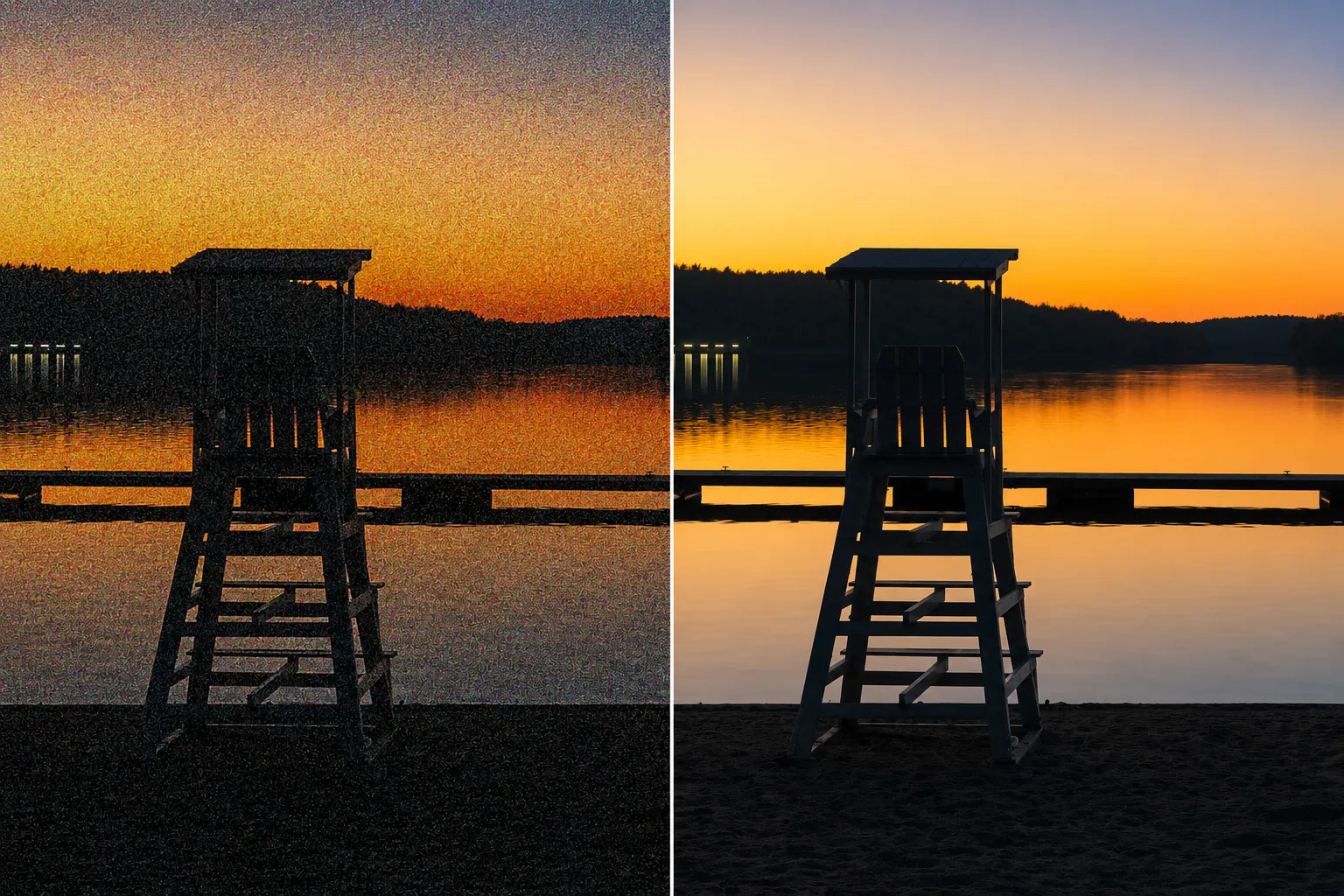
ISO refers to how sensitive your sensor is to light. A low ISO value (like ISO 100) gives you high image quality with minimal noise. A high ISO value (like ISO 1600 or above) increases sensitivity, making it possible to shoot in low-light conditions.
ISO plays a central role in the exposure triangle: it determines how strongly the sensor reacts to light. Raise the ISO, and at the same aperture and shutter speed, more effective light reaches the sensor — the image gets brighter. But higher values come with a trade-off: image noise. That’s why it’s worth experimenting with different ISO settings to find the right balance between correct exposure and image quality.
If you want to go deeper on ISO specifically, check out our guide to ISO in photography.
05Understanding How They Work Together
Understanding the exposure triangle really just means grasping how the three settings depend on each other. Open the aperture, adjust the shutter speed, raise or lower the ISO — every change affects the other two. That interdependence is the foundation for getting a correctly exposed photo in any situation.
Anyone who experiments with different combinations and pays attention to how light hits the sensor quickly picks up an intuitive feel for the exposure triangle. Over time, you develop a sense for how aperture, ISO, and shutter speed work together to find the right exposure for any subject.
06Takeaway — Balancing Light and Creative Control
The exposure triangle is the foundation of photography. It helps you control the balance between brightness, sharpness, and motion, and shape your image with intention.
The better you understand how aperture, shutter speed, and ISO relate to each other, the more freely you can shoot — independent of auto modes or tricky lighting. Over time, you’ll stop just taking photos and start genuinely understanding light, using it deliberately to develop a visual style that’s your own.
Frequently Asked Questions About the Exposure Triangle
What is the exposure triangle, explained simply?
The exposure triangle describes how aperture, shutter speed, and ISO work together. All three settings jointly determine how much light hits the sensor and whether your photo is correctly exposed. Change one setting, and you usually need to adjust one of the others to keep the exposure balanced.
Which setting in the exposure triangle matters most?
None of the three settings is inherently more important — they depend on each other. Aperture is key for sharp landscape shots, shutter speed matters most for freezing motion, and ISO becomes the priority in low light.
How does aperture affect depth of field?
A wide aperture — a low f-number like f/1.8 — creates a shallow depth of field with a blurred background. A narrow aperture — a high f-number like f/11 — gives you more depth of field and an overall sharper image.
Why does high ISO cause image noise?
A high ISO value amplifies the sensor’s signal to brighten the image. That amplification also makes small imperfections in the signal more visible, which shows up as image noise, especially in darker areas of the frame.