Best Camera for Beginners: What Matters
I was convinced that only the most expensive camera could take great photos. That one wrong assumption cost me months — and it’s the same mistake nearly every beginner makes. Here’s what actually matters.
01Why This Decision Feels So Hard at First
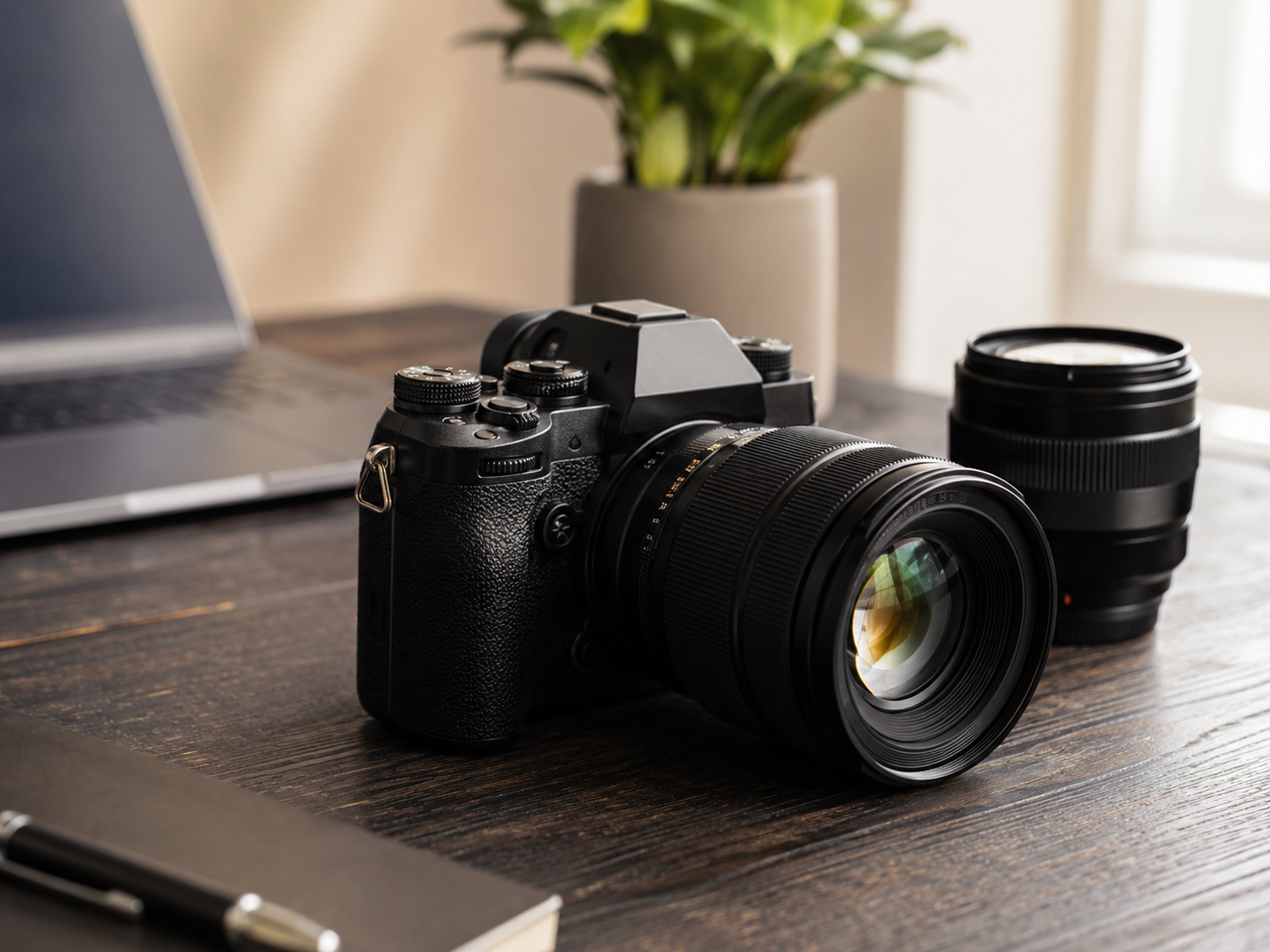
When I started out in photography, I had a completely wrong idea of what actually matters for beginners. I was convinced that only the best camera could take the best photos. More expensive, newer, more technical — the result just had to be better, or so I thought.
So I spent countless hours comparing cameras, reading reviews, and scrolling through forums and Facebook groups. But instead of finding answers, every new opinion just made me more uncertain. Everyone said something different: for one person it was all about low-light performance, for another it was the sensor, and others swore by specific systems or features entirely.
And that’s exactly why this decision feels so hard at the start: it’s not really about the technology — it’s the fear of making the wrong choice. The worry that you’ll regret the purchase later because you think you picked the wrong model. That uncertainty keeps a lot of people from ever starting, even when they’re genuinely ready inside.
Maybe you’re in that exact spot right now: you just want to take good photos, but you don’t know which camera is actually right. This is where every photographer’s journey really begins — not with perfect gear, but with the decision to start at all.
02What Finally Gave Me Clarity
Over time I realized it’s not the camera that makes the photo — it’s the person behind it. Technology can help, but it doesn’t replace an understanding of light, perspective, or feel. Still, it’s completely normal as a beginner to feel overwhelmed by all the numbers, terms, and recommendations out there — after all, nobody wants to get it wrong.
That’s exactly why it helps so much to take a moment and really understand the fundamentals — especially how light, aperture, shutter speed, and ISO work together. I break that whole relationship down in our guide to the exposure triangle.
I learned there’s no single perfect camera. Nearly every modern digital camera today is technically capable enough to produce genuinely impressive images. DSLRs and mirrorless cameras in particular both deliver excellent image quality — the real differences lie less in raw performance and more in how they handle and feel in use.
What matters more than any spec sheet is that you actually enjoy using the camera. Look for something that feels intuitive, sits comfortably in your hands, and makes shooting feel easy rather than like a chore. A camera that feels familiar motivates you to shoot more often — and that’s exactly what makes you better.
So it’s less about budget or technical specs, and more about which model gives you the feeling that you’re genuinely being creative.
03Sensor Size — APS-C or Full Frame?
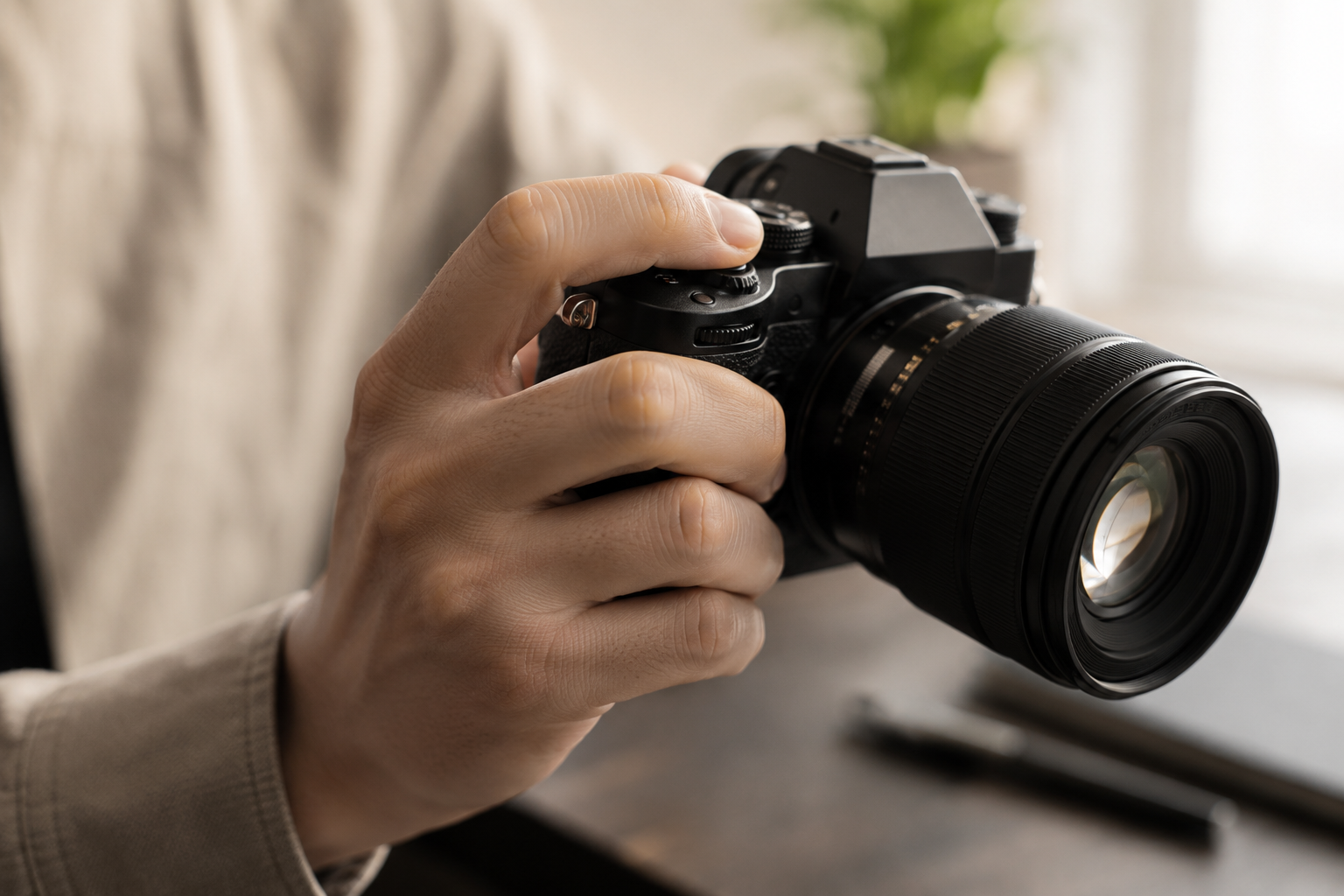
Shopping for a new camera, you’ll quickly run into terms like APS-C sensor or full-frame sensor. This technical distinction sounds more complicated than it actually is.
An APS-C sensor makes cameras smaller, lighter, and more affordable — ideal for travel or as your first beginner camera. A full-frame sensor, on the other hand, gives you more headroom in low light, a shallower depth of field, and a wider dynamic range.
But sensor size alone doesn’t determine how good your images turn out. What matters far more is finding a camera that fits what you actually shoot. If you’re often out and about or traveling, a compact mirrorless camera is usually the better call. If you work mostly in a studio or want maximum image quality, a full-frame camera pays off.
04Why the Lens Matters More Than the Camera
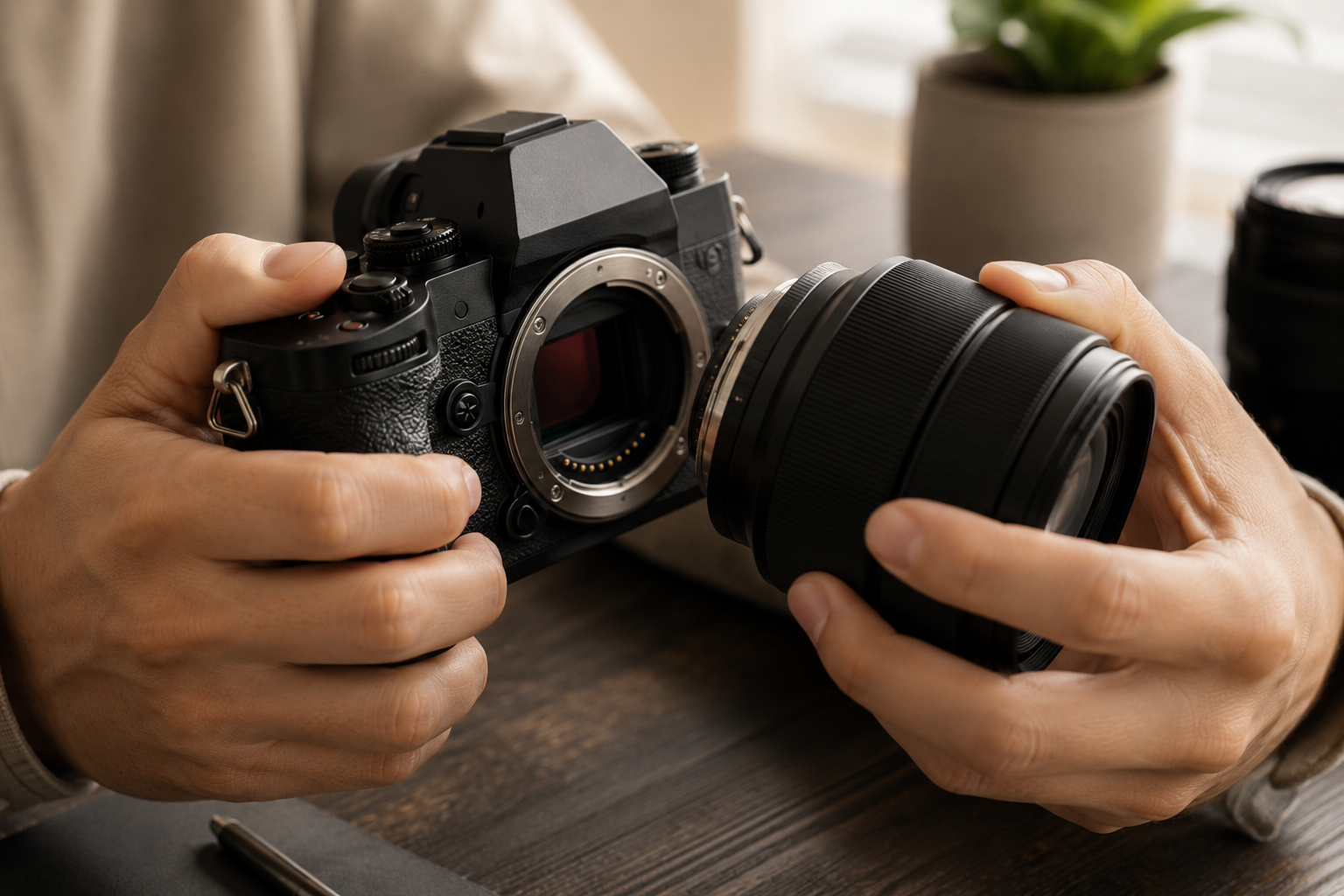
A lot of beginners underestimate just how much the lens shapes image quality. A camera paired with a good zoom lens or a fast prime often delivers better results than a brand-new body alone. With interchangeable-lens mirrorless cameras especially, you can grow your kit over time and shape it around your own style.
The right focal length lets you deliberately shape the character of your photo — from a wide landscape shot to a portrait with soft, creamy bokeh. A quality lens often stays with you for years, even after you eventually switch camera bodies. That’s why it’s worth looking beyond megapixels or burst speed when you buy, and paying attention to the lens selection available for that system instead.
05Viewfinder and Handling
Choosing the right camera isn’t just a technical decision — it’s also about feel. The viewfinder plays a big part in that. With a DSLR, you look through an optical viewfinder and see the scene directly. A mirrorless camera instead uses an electronic viewfinder that shows you roughly what the final image will look like before you even press the shutter.
Both approaches have their advantages — what matters is which one you feel more comfortable with. Ergonomics matter just as much: does the camera sit well in your hand? Are the key buttons where you’d naturally reach for them? Is the screen readable even in bright sunlight? A camera that feels familiar is one you’ll actually reach for more often — and that’s exactly what builds confidence over time.
06Let Your Goals Guide the Choice
Before settling on a model, think about what you actually want to shoot. Do you travel a lot? A small, compact camera or a lightweight mirrorless body is ideal. Do you love portraits or close-up detail shots? Fast lenses and precise autofocus matter more to you than a high burst rate.
If you want to stay flexible as a beginner, an interchangeable-lens mirrorless camera gives you the most room to grow — you can expand and adapt your kit as your interests shift. The key thing to remember: the best camera is always the one you actually use. A camera that’s too heavy, too complicated, or too technical tends to just stay home.
07Takeaway: How to Find Your Camera
In the end, it’s not about buying the most expensive camera — it’s about finding the one you feel most comfortable with. If you’re a beginner looking for a camera that feels good in your hands, makes photography enjoyable, and lets you grow into it, you’ve already made the right choice.
Today’s camera market has something for every kind of shooter, whether you prefer working manually or letting the camera handle most of the settings automatically. Compact, mirrorless, or DSLR — what’s printed on the body matters far less than whether you actually enjoy capturing the world through it. The perfect mirrorless camera, in other words, isn’t necessarily the most expensive one — it’s the one you actually use.
Frequently Asked Questions From Beginners
What’s the best camera for beginners?
There’s no single best camera for beginners — what matters is that the model feels intuitive to use and comfortable in your hands. A mirrorless camera with an APS-C sensor is a solid balance of image quality, size, and price for most people starting out.
Do I need a full-frame camera as a beginner?
No. A full-frame sensor helps in low light and gives you a shallower depth of field, but you rarely need that when you’re starting out. An APS-C camera is more than enough to learn the fundamentals and get great results.
What matters more for beginners: the camera or the lens?
The lens often has a bigger impact on image quality than the camera body itself. It’s worth putting part of your budget toward a good beginner lens instead of spending it all on the body.
DSLR or mirrorless — which is better for beginners?
Both systems deliver excellent image quality today. Mirrorless cameras tend to be more compact and show you the final image electronically before you shoot, while DSLRs give you a classic optical viewfinder. It really comes down to personal preference.